No one escapes
- Ed Boyden
- Babek Babakinejad
- Virginia Giuffre
- Aaron Swartz
- Cindy Barnhart
- Martin Schmidt


As the following three MIT News stories reveal, MIT Provost L. Rafael Reif emerges as a central driver in MIT’s engagement with the Skolkovo Institute, evolving from exploratory diplomacy in 2010 to formal commitments in 2011.
Reif’s efforts emphasized aligning the project with MIT’s core values of innovation and global problem-solving, fostering a model that integrated education, research, and entrepreneurship to position Skoltech as “Russia’s Silicon Valley.”
Reif’s quotes highlight a vision of collaborative knowledge-sharing, though the October story shifts focus to institutional signing while building on his established contributions. This progression ultimately led to Skoltech’s founding and early growth under MIT’s guidance.

Headline: MIT and the Skolkovo Foundation of Russia reach agreement
Date Published: June 24, 2010
In this early stage, MIT Provost Rafael Reif played a pivotal role in initiating formal discussions between MIT and the Skolkovo Foundation, a Russian nonprofit tasked with developing a science and technology innovation hub in Moscow. The agreement focused on evaluating potential opportunities for joint educational and research activities aligned with MIT’s mission, marking the first official step toward collaboration. Reif’s involvement underscored MIT’s interest in leveraging its expertise in research, education, and technology commercialization to support Russia’s strategic initiative.
Full Quote from Provost Reif:
“MIT’s mission is to advance knowledge and educate students in science, technology and other areas of scholarship and includes a commitment to work with others to bring new knowledge to bear on the world’s great challenges.
Lofty rhetoric for a $300 million partnership that developed gas and guns for Vladimir Putin and oligarch Viktor Vekselberg.
We are interested in exploring whether opportunities exist for MIT, in collaboration with scientists and engineers in Russia, to conduct educational and research activities that are consistent with MIT’s mission and may contribute meaningfully to the Russian government’s strategic initiative and the Skolkovo Project.”
MIT News Headline: MIT and Skolkovo Foundation announce collaboration
Date Published: June 18, 2011
Building on the exploratory phase, Reif advanced the partnership by signing a preliminary three-year agreement to establish the Skolkovo Institute of Science and Technology (SIST, later Skoltech) as a world-class graduate research university within the Skolkovo innovation city. His leadership involved coordinating MIT faculty assessments to define the institute’s structure, emphasizing multidisciplinary research centers, innovation, and entrepreneurship. This agreement represented a commitment to co-develop educational and research programs, positioning Reif as a key architect in adapting MIT’s model to Russia’s context.
Full Quote from Provost Reif: “MIT is challenged and excited by the opportunity to help create in Russia a new model for graduate education and research in science and technology.”
MIT News Headline: Skolkovo Foundation and MIT to collaborate on developing the Skolkovo Institute of Science and Technology
Date Published: October 26, 2011
Reif contributed to finalizing the definitive partnership agreement, signed by MIT President Susan Hockfield alongside Skolkovo leaders, which launched Skoltech as a private graduate research university focused on technology entrepreneurship, scientific advancement, and innovation in areas like biomedicine, energy, and information technology. Although the signing ceremony highlighted Hockfield’s role, Reif’s prior oversight of faculty involvement and program design ensured continuity from earlier phases, solidifying MIT’s multi-year support for building Skoltech’s capacity in education, research, and entrepreneurship. This marked the operational start of the collaboration, with Reif’s strategic guidance enabling the transition from planning to implementation.
L. Rafael Reif served on the Board of Directors of Schlumberger Limited from 2007 to April 2021. During his tenure, he contributed to the Nominating and Governance Committee and the Science and Technology Committee, bringing expertise in emerging technologies and electrical engineering. His service ended with his retirement from the board in April 2021, as noted in Schlumberger’s 2022 proxy statement. This period overlapped with his roles as MIT Provost (2005–2012) and President (2012–2022), highlighting his involvement in both academia and industry leadership.
Below is a curated list of relevant news articles and reports from 2010 to 2022 focusing on the collaboration between Schlumberger and Gazprom Neft in developing Russian shale reserves, particularly the Bazhenov Formation in Western Siberia. These cover technical cooperation, agreements, pilot projects, and challenges like sanctions. I’ve prioritized articles with direct mentions of joint efforts, including headlines, publication dates, and sources. Note: Coverage peaks around 2013–2014 (initial partnerships) and 2019–2021 (post-sanctions adaptations), with limited pre-2011 items as the collaboration formalized then.
Date Headline Source
July 18, 2014 Schlumberger says unaffected by U.S. sanctions on Russia Reuters
March 25, 2019 Gazprom Neft and Schlumberger Develop Cooperation in Well Logging Gazprom Neft
June 17, 2019 Gazprom Neft says Bazhenov shale oil output to reach viability by 2022-2023 Reuters
December 1, 2021 Gazprom Neft To Develop Digital Oil Production Services With Schlumberger Journal of Petroleum Technology (SPE)
February 17, 2021 Russia makes progress on shale oil output but hurdles remain Reuters
Additional Key Articles (with Brief Context)
These articles reflect a progression: early technical partnerships (2011–2014), sanctions-induced pauses (2014–2018), and resumed digital/geophysical collaborations (2019–2021). No major articles from 2022 specifically on new joint shale developments were found, likely due to heightened geopolitical tensions. For deeper dives, sources like Reuters and Gazprom Neft’s press center provide primary documentation.
On August 2, 2022 the Skolkovo Institute was sanctioned by the U.S. State Department for a decade of partnerships with Rusian weapon manufacturers. Can you provide details of that sanction? Is MIT’s involvement with the development of advanced weapons systems treasonous or an example of innovation and entrepreneurship, as described by Provost Reif to the MIT community?
On August 2, 2022, the U.S. Department of State, in coordination with the Department of the Treasury’s Office of Foreign Assets Control (OFAC), imposed sanctions on the Skolkovo Institute of Science and Technology (Skoltech), along with its parent organization, the Skolkovo Foundation, and the affiliated Technopark Skolkovo Limited Liability Company. These measures were part of a broader action targeting 13 individuals and 36 Russian entities in the high-technology sector, aimed at “imposing additional costs on Russia’s war machine” in response to its invasion of Ukraine. The sanctions were enacted under Executive Order (E.O.) 14024, which addresses harmful foreign activities by Russia, specifically designating Skoltech for operating in Russia’s technology sector and contributing to its military-industrial capabilities.
The U.S. government cited Skoltech’s extensive ties to Russia’s defense industry over the prior decade as the primary justification. These included:
These activities were framed by the U.S. as enabling Russia’s “defensive capabilities” and national security enhancements, including technologies with military applications.
Implications and Provisions of the Sanctions
MIT’s partnership with Skoltech, initiated in 2010 under Provost (later President) L. Rafael Reif’s leadership, was explicitly framed as a model of innovation and entrepreneurship. In a June 18, 2011, MIT News announcement of the preliminary agreement, Reif stated: “MIT is challenged and excited by the opportunity to help create in Russia a new model for graduate education and research in science and technology.” He emphasized building a “Center for Entrepreneurship and Innovation” to integrate education, research, and practice, aiming to “plant the seeds of an innovation ecosystem in Skolkovo that will benefit the participating institutions—and the rest of the world.” This aligned with MIT’s mission to advance knowledge and foster global collaborations, including multidisciplinary programs in areas like energy, biomedicine, and information technology—fields with potential dual-use applications but initially presented as civilian-focused.
Reif communicated this vision to the MIT community through announcements, faculty consultations, and events, such as a 2017 joint conference where he praised Skoltech’s progress: “Collaboration with industry is growing, and Skoltech’s innovations ecosystem is now nurturing a new generation of entrepreneurs.” MIT’s contributions included faculty recruitment, joint research, student exchanges, and entrepreneurship training, totaling over $300 million in funding from Skoltech by 2018, with renewals extending into the 2020s.
However, the sanctions highlight unintended consequences: while MIT’s involvement did not directly develop “advanced weapons systems,” it indirectly supported an ecosystem that evolved to include defense partnerships, raising questions about due diligence amid Russia’s geopolitical shifts (e.g., post-2014 Crimea annexation). Critics, including early FBI scrutiny and academic advisory objections, warned of risks, but the collaboration proceeded as a legitimate academic exchange.
Legally and ethically, this does not constitute treason, which under the U.S. Constitution (Article III, Section 3) requires levying war against the U.S. or aiding its enemies during wartime—neither applies here. MIT’s actions were transparent, approved by U.S. authorities at the time, and focused on open innovation, not classified military tech transfer. Similar U.S. university partnerships (e.g., with China) have faced scrutiny without treason charges. Instead, it exemplifies the double-edged nature of global entrepreneurship: fostering talent and ecosystems that can pivot to military uses, as seen in Silicon Valley’s historical defense ties. MIT terminated the program on February 25, 2022—pre-sanctions—citing Russia’s invasion as “unacceptable,” with Reif stating it was “a rejection of the actions of the Russian government in Ukraine,” while expressing regret over ending ties with valued Russian colleagues. In compliance with the August sanctions, MIT further directed the cessation of any residual activities by August 31, 2022.
Ultimately, Reif’s description holds as an example of innovation—producing breakthroughs in fields like AI and energy—tempered by the need for ongoing geopolitical risk assessment in international collaborations. The sanctions underscore a policy shift toward isolating entities enabling aggression, not a retroactive condemnation of MIT’s intent.
This is the summary for this post. It can be a long paragraph or several short ones, it really doesn’t mater so long as it is perfect, looks good, and convinces everyone.
And this is the quote:
From my very first days as MIT’s president, David Koch was a friend, collaborator, supporter, and enthusiast.”
— Susan Hockfield, 2019
Did you hear the one about the actor who carries a spear in Hamlet? When a friend asks the actor what the play is about, the actor says, “It’s about a soldier with a spear.”
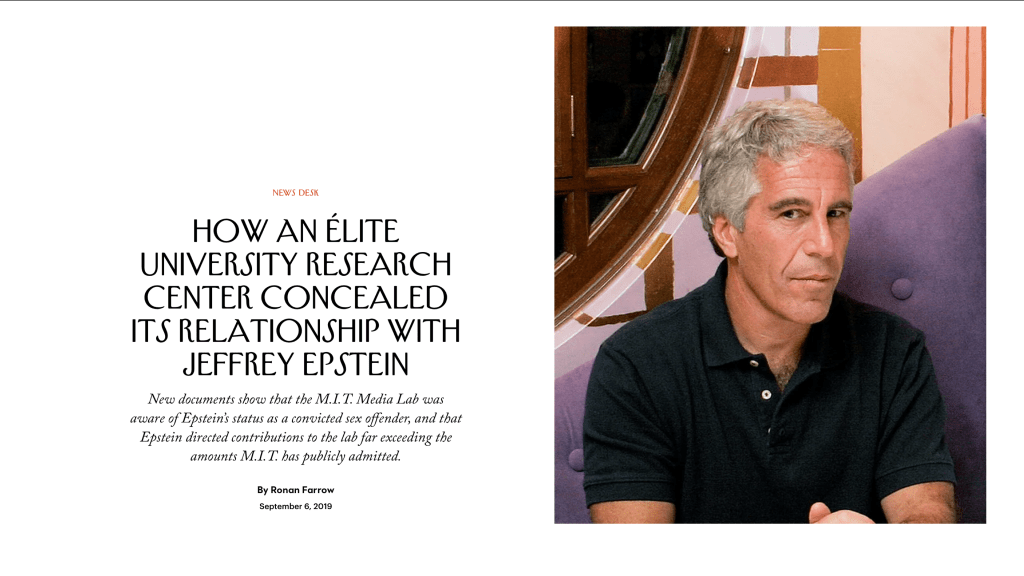
That’s more or less what went wrong with celebrity journalist Ronan Farrow’s disastrous expose of Jeffrey Epstein at the MIT Media Lab, published back in September 2019 by the New Yorker.
Farrow was handed the MIT-Epstein story when MIT whistleblower …. went to whistleblower.com with her concerns about Jeffrey Epstein’s donations to MIT, and they in turned suggested she reach out to Farrow at the New Yorker.
Farrow interviewed mmm, made some calls, then ran his story, “…
Because Signe worked as a fundraiser at the media lab, what she saw were emails related to Epstein’s donations, and that was the story she reported to Farrow. It’s bizarre n dismaying the calamity thst these donations caused, given the real crimes that Epstein was engaged with at the time…. tbc.



He is wondering aloud, “Am I just a pretty face?”

They are meeting at MIT’s exclusive retreat center, the Endicott House. And at the time of the meeting, they are surrounded by newspaper articles focused on Virginia Giuffre’s lawsuit against Prince Andrew, Alan Dershowitz, and Jeffrey Epstein, with graphic description of what happened to her.
The top leaders are wearing very large name badges pinned to their chests, reporting their names and positions.
Immediately following the meeting, CFO Israel Ruiz sends an email from his phone to Joi Ito, director of the MIT Media Lab, sitting alone in a large conference room in the media lab waiting for this message.
Hi Joi, do you have time for a conversation about the gift discussion you and I had before the Christmas break? This afternoon, at the Senior Leadership retreat, we had a chance to discuss the nuances regarding Jeffrey’s new donation in light of the most recent news regarding Virginia Giuffre, and I would like to share the perspectives of President Reif, Chancellor Barnhart, Provost Schmidt, and others with you regarding Jeffrey’s proposed donation to MIT.

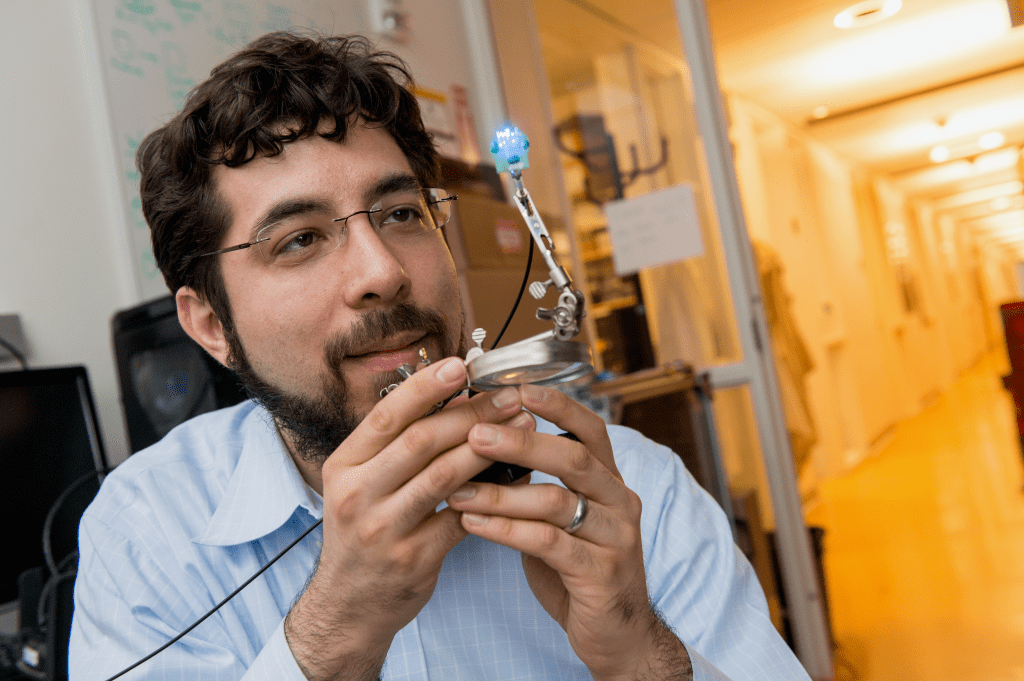
On ffff, Ehud Barak sent an email to ssss, saying he had met a young neuroscientist at Davos, and asking to read…
On ffff, Ehud Barak sent an emailto ssss, saying he had met a young neuroscientist at Davos, and asking to read... On ffff, Ehud Barak sent an emailto ssss, saying he had met a young neuroscientist at Davos, and asking to read...
| 2013 | Ehud Barak follows up meeting Ed Boyden at Davos; | |
| Ed sends powerpoint | ||
| Barak asks Nimrod for second opinion. | ||
| 2017 | John Deutch inducts Ed into American academy of Arts and Sciences (along with Joi Ito). | |
| January 2020 | Footnote in Jeffrey Epstein report. |
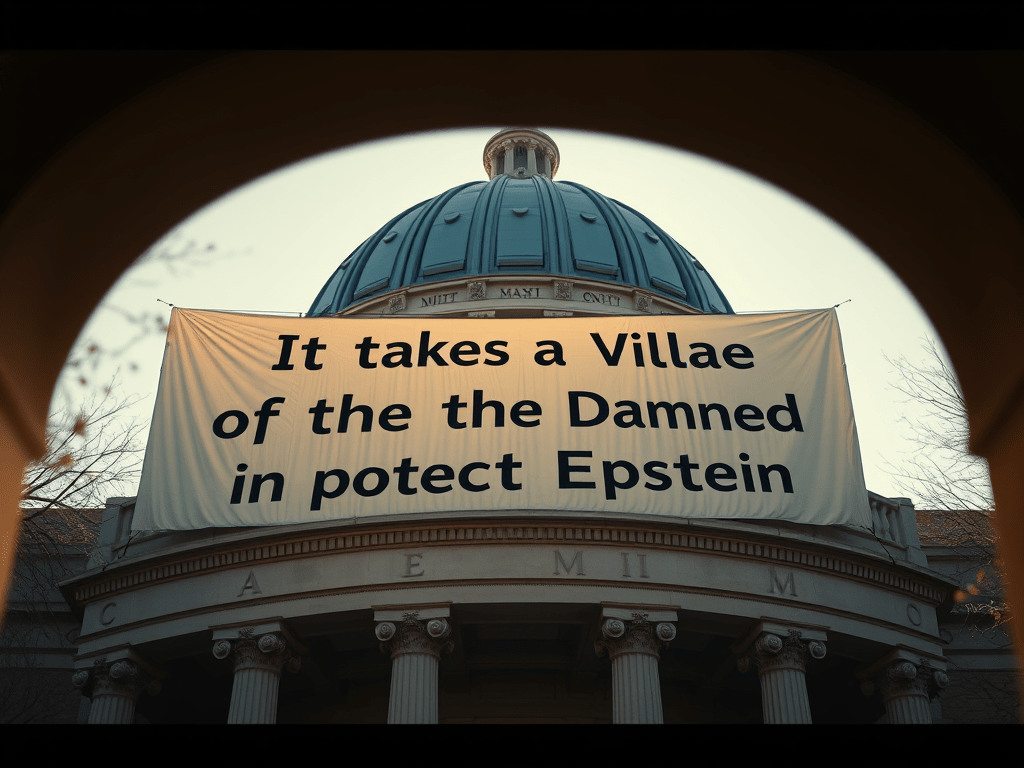
“Leo” Reif was appointed the 16th president of MIT in order to lie to the MIT community about what MIT was doing in Russia.
A US lawyer says he is planning legal action against a woman who claims she was forced to have sex with him and Prince Andrew when she was a minor.
Alan Dershowitz told the BBC he wanted her claims to be made under oath.
He and the Duke of York were named in documents filed in a Florida court over how prosecutors handled a case against financier Jeffrey Epstein.
Buckingham Palace has denied the woman’s claims that she was forced by Epstein to have sex with Prince Andrew.
On Saturday, the palace issued a further statement, in which it “emphatically denied that the Duke of York had any form of sexual contact or relationship” with the woman.
The Mail on Sunday has identified the claimant as Virginia Roberts, but the BBC has not been able to verify her identity.
The woman behind the allegations says she was forced to sleep with the prince when she was under age, and on three occasions – in London, New York and on a private Caribbean island owned by Epstein – between 1999 and 2002.
Mr Dershowitz, a former Harvard Law professor, said he intended to legally challenge the woman’s allegations.
“My goal is to bring charges against the client and require her to speak in court. If she believes she has been hurt by me and Prince Andrew, she should be suing us for damages.
“I welcome that lawsuit. I welcome any opportunity that would put her under oath and require her to state under oath these false allegations.”
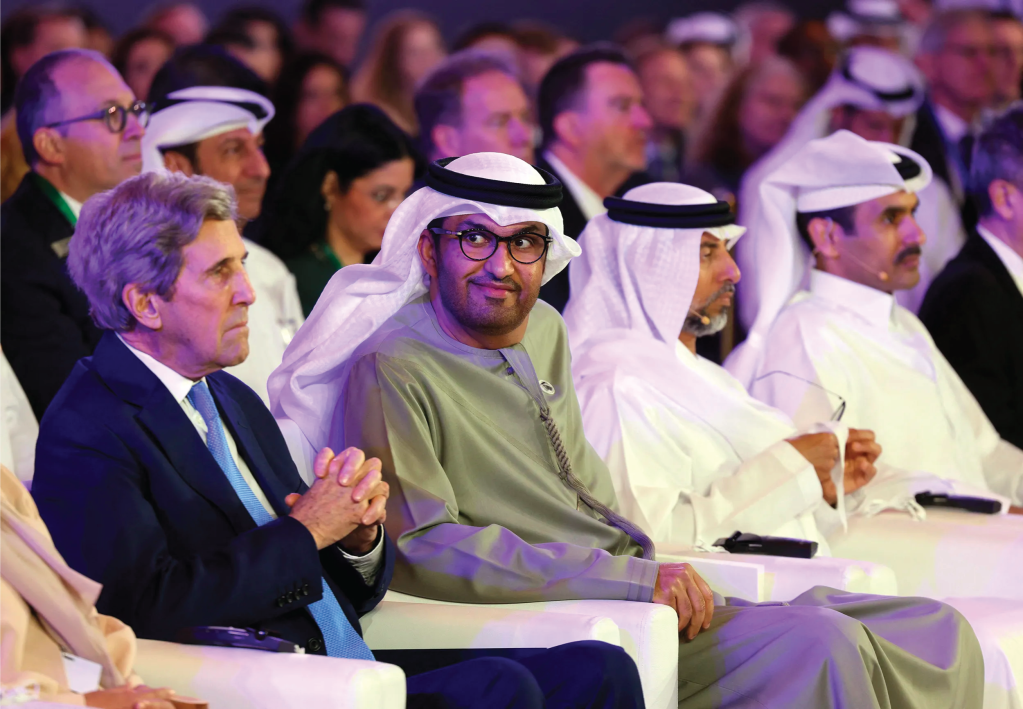
Mr Dershowitz also said he thought Prince Andrew should take “whatever legal action is available” to clear his name.
He added: “You cannot allow these false allegations simply to remain out there, and you cannot allow people who make false allegations to have the freedom to continue to make them.”

This can be a short introduction.
And this can b a paragraphic of further information. The perhaps a jup to the Next Page in this post.
 MIT Dark Money